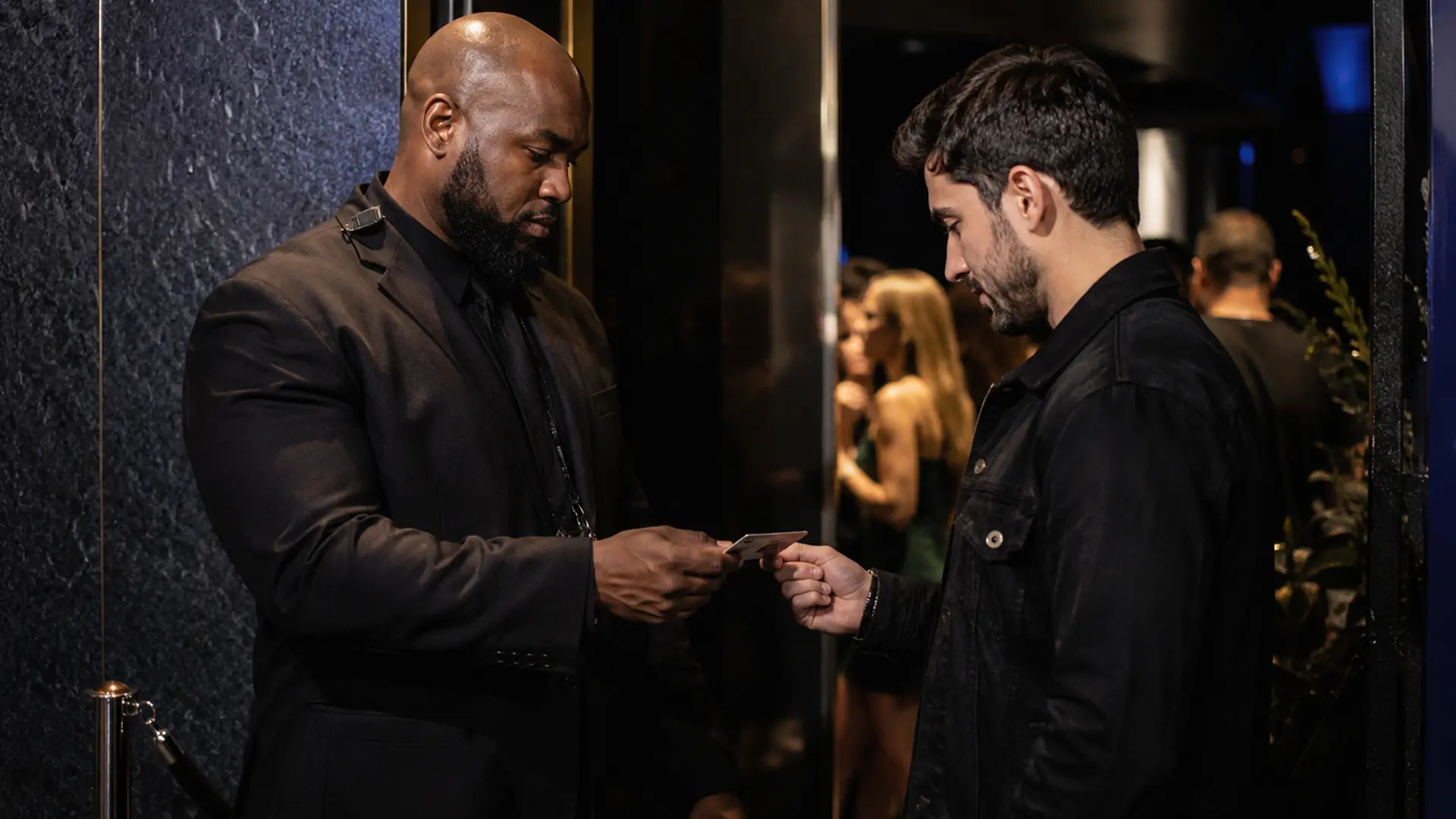

A ban that exists only in one staff member’s memory disappears when that person leaves the door.
That is why ban management is not just a security feature. It is an information-management problem.
A venue ban list app can help keep the decision visible to the people who need it, across shifts and entrances. The software does not decide who should be banned. That remains a venue policy decision.
Why informal ban lists break down
Many venues start with a notebook, a staff group chat, or a manager’s phone.
Those methods can work for a small team until information starts moving quickly.
A note may be unclear. A message may be buried. A new employee may never see it. A second entrance may have no access to it at all.
The problem is not that staff forgot how to ban someone. The problem is that the information did not reliably follow the operation.
A ban system needs policy first
Before choosing software, decide how your venue handles bans.
Who can add one? Who can remove one? Does the ban have an expiration date? What information should be recorded? When should a manager be involved?
Those decisions matter because software can enforce a workflow, but it cannot create a fair or sensible policy on the venue’s behalf.
If your venue stores information about people, you also need to understand the privacy and data-retention requirements that apply to your operation.
Visitor tracking adds another layer
Ban management answers one question: who should staff watch for?
Visitor tracking answers a different question: what is happening at the venue right now, and what happened during the shift?
Depending on the system, this can include entries, exits, occupancy-related counts, and scan history.
That information can help managers understand the operation after the rush is over. It can also help staff at different entrances maintain the same picture of the venue.
Why synchronization matters
Suppose a guest is refused at 10:15 p.m. and added to the venue’s ban list.
At 10:30, the same guest approaches another entrance.
A local note at the first door is not enough. The second door needs access to the same information.
That is why a synced ban list is more useful than simply keeping a digital list on one device.
IVO combines ban management with Team Sync, visitor tracking, and scan history on connected iPhone and iPad devices.
Do not confuse tracking with surveillance
A venue should be able to explain why it collects information and what it does with it.
Staff should understand what the system records, who can access it, and how long information is retained. Managers should review the vendor’s privacy terms and make sure the venue’s own procedures comply with applicable requirements.
The purpose of visitor tracking should be clear. If the operational need is entry and exit awareness, the venue should avoid collecting unrelated information simply because the software makes it possible.
What a useful system looks like
When comparing a venue ban list app, look for a workflow that staff can actually follow:
- Add or remove bans according to defined permissions
- Make relevant changes available to connected doors
- Review scan history when management needs context
- Track visitor movement where the venue uses that information
- Keep the interface understandable during a busy shift
The technology should reduce uncertainty, not create another system that staff have to remember to maintain.
Where IVO fits
IVO’s ban and visitor features are designed around the same problem as Team Sync: information should not be trapped on one person’s device.
A staff member can work the door, while management maintains the broader venue picture through the connected system.
That does not replace good judgment. It makes the information behind that judgment easier to share.
For venues with one entrance and little staff turnover, this may be less important. For venues with multiple doors, rotating teams, and recurring incidents, it can become a significant operational advantage.